

Doppler Blood Pressure Monitoring & Assessment
Gentle, non-invasive blood pressure assessment for dogs and cats.
Doppler monitoring uses a small cuff and an ultrasound probe to estimate your pet’s systolic blood pressure—the pressure in the arteries when the heart contracts.
At TriState Cardiology for Pets, blood pressure assessment helps us identify systemic hypertension, evaluate cardiovascular health, and monitor your pet’s response to treatment.
What Is Doppler Blood Pressure Monitoring?
Doppler blood pressure monitoring is a non-invasive way to estimate the pressure in your pet’s arteries. A small ultrasound probe detects blood flow, while an inflatable cuff briefly compresses an artery. As the cuff is slowly released, the return of the blood-flow sound helps determine the systolic pressure, or “top number.”
Unlike a blood test, this assessment does not require a needle or blood sample. It complements a physical examination and other cardiac tests rather than replacing them.
Why Would My Dog or Cat Need a Blood Pressure Check?
High blood pressure may develop without obvious outward signs. If it persists, it can damage the eyes, kidneys, brain, and heart. Your veterinarian may recommend monitoring when your pet has:
Kidney disease or another condition associated with hypertension
Hyperthyroidism in cats or certain hormonal disorders in dogs
Suspected hypertension or changes affecting the eyes or nervous system
Heart disease that warrants blood pressure assessment
A need to monitor the effects of blood pressure or other cardiovascular medications
The decision to test and the timing of rechecks depend on your pet’s age, medical history, examination findings, and treatment plan.
What Happens During the Assessment?
Our team measures your pet’s back leg to select an appropriately sized cuff. A limb or the tail may be used depending on the patient and technique. A small area of fur may be clipped, and ultrasound gel helps the probe make contact with the skin.
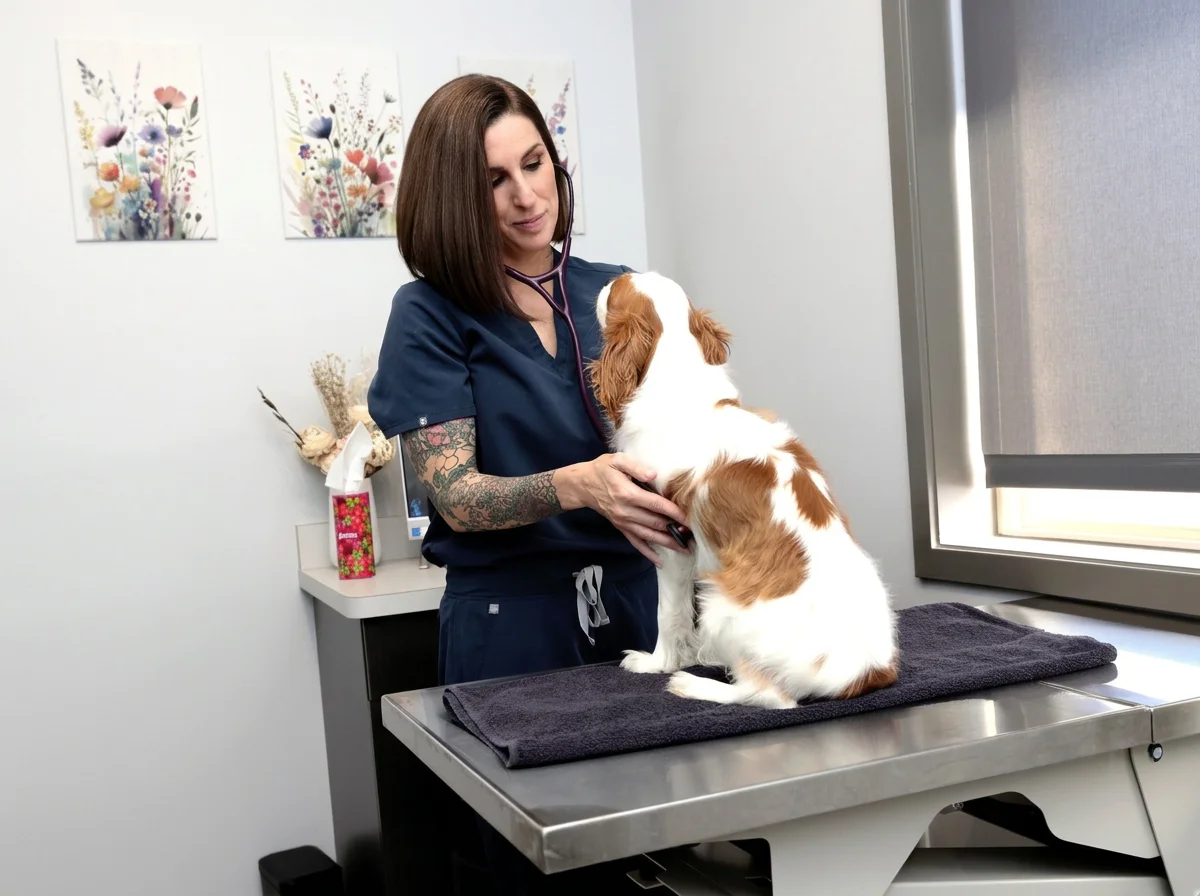
Your pet rests in a comfortable position with gentle restraint. The cuff is inflated and slowly deflated while the operator listens to the Doppler signal. Several consistent readings are collected and averaged, rather than relying on a single measurement.
A quiet setting and time to settle help reduce temporary stress-related elevations. Routine blood pressure assessment is generally performed while your pet is awake because sedation can affect the result.
Understanding Your Pet’s Results
There is no single “normal” number that applies to every dog or cat. Stress, movement, cuff size, body position, and measurement technique can all influence a reading. Your veterinarian interprets the result alongside your pet’s health and any evidence of organ injury.
Persistently elevated readings may lead to repeat measurements, tests for an underlying condition, or treatment. A high reading during one anxious visit does not automatically establish ongoing hypertension. Markedly elevated pressure or signs of organ damage may require prompt action.
Monitoring and Follow-Up Care
Rechecks help determine whether blood pressure remains elevated and whether treatment is effective. Your veterinary team will recommend an individual schedule and coordinate findings with your primary veterinarian. Do not change prescribed medications unless your veterinarian advises it.
Sudden loss of vision, seizures, collapse, or difficulty breathing needs immediate veterinary attention rather than waiting for a routine appointment.
Doppler Blood Pressure Monitoring FAQs
-
The test is non-invasive and generally well tolerated. Your pet feels the cuff tighten briefly, much like a human blood pressure check. Gentle handling and a comfortable position help keep the experience calm.
-
Routine blood pressure checks are usually performed while your pet is awake. Sedation and anesthesia can change blood pressure, so they are generally avoided when assessing resting pressure. Your veterinarian will tailor the approach if your pet is very anxious or cannot be handled safely.
-
Yes. Anxiety, excitement, and movement can temporarily raise blood pressure. Time to settle in a quiet room, minimal restraint, and several consistent readings help improve the assessment. A repeat visit may be recommended before diagnosing persistent hypertension.
-
Doppler testing estimates systolic pressure, the pressure in the arteries when the heart contracts. It does not reliably provide the full top-and-bottom-number reading familiar from human medicine. Your veterinarian interprets the result with your pet’s history, examination, and repeated measurements.
-
Follow the instructions provided for your appointment, especially if other tests are planned. Ask the team about food and medication instructions, and do not stop prescribed medicines on your own. Bring a current medication list and tell the team if your pet becomes anxious at veterinary visits.
-
Your veterinarian may repeat the measurements and investigate conditions such as kidney disease or hormonal disorders. Treatment depends on whether the elevation persists, its severity, and any evidence of organ injury. Medication and follow-up checks may be needed; urgent findings require prompt care.
-
The schedule depends on the initial readings, underlying disease, and medications. Pets starting or changing treatment may need earlier reassessment, while stable patients may have checks during planned follow-up visits. Your veterinarian will recommend the interval for your pet.