

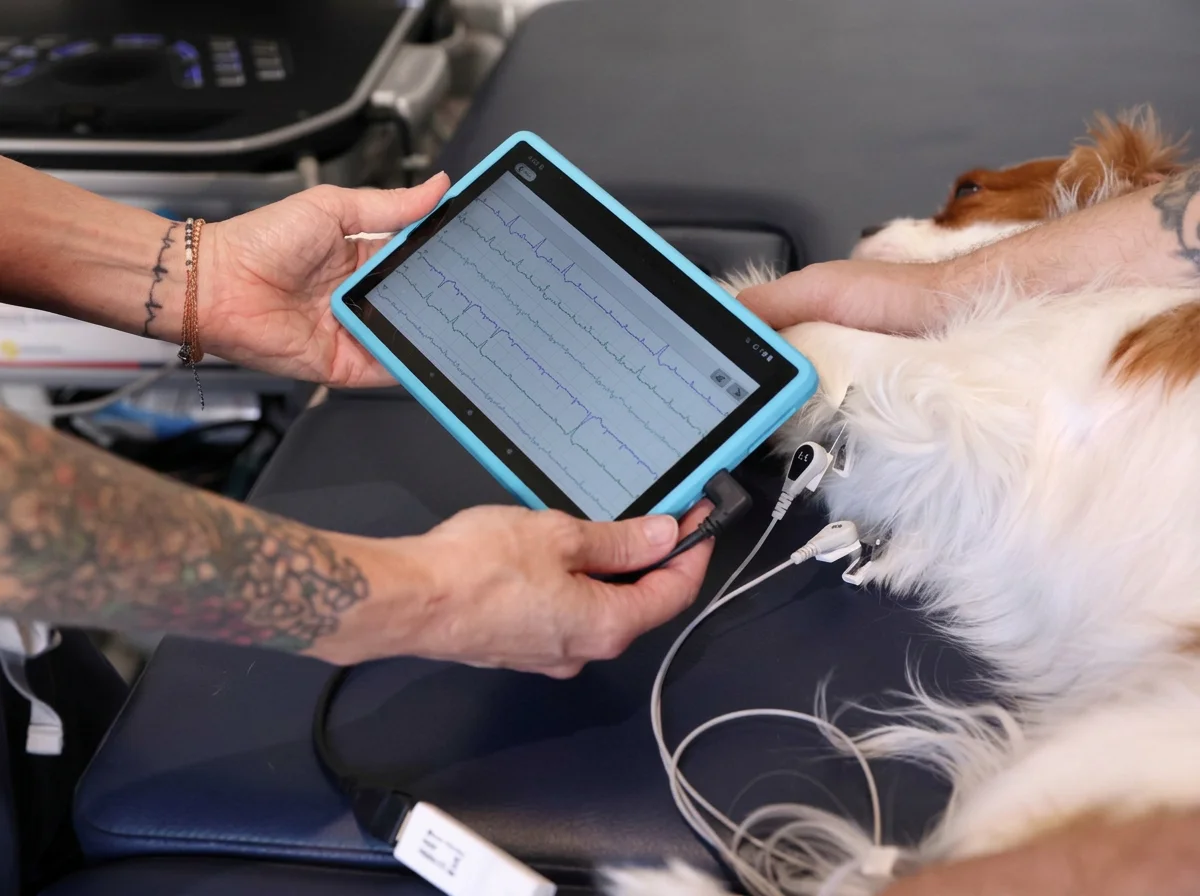
A non-invasive recording of your pet’s heart rate and rhythm.
An electrocardiogram (ECG, also called an EKG) records the electrical signals that coordinate each heartbeat. It helps our veterinary cardiologist identify abnormal rhythms and problems with electrical conduction.
At TriState Cardiology for Pets, we offer rhythm strips, 6-lead, and 12-lead ECGs to evaluate your dog or cat’s heart rhythm and guide appropriate care.
ECG & EKG Services
What Is an Electrocardiogram?
An electrocardiogram records the heart’s electrical activity from electrodes placed on the skin. The tracing shows the timing and pattern of each heartbeat, helping the cardiologist assess heart rate, rhythm, and the conduction of electrical impulses.
ECG and EKG are two names for the same test. An ECG records signals generated by the heart; it does not deliver electricity into your pet or use radiation.
Why Would My Dog or Cat Need an ECG?
Your veterinarian may recommend an ECG after hearing an abnormal rhythm or when symptoms raise concern about a rhythm disturbance. Reasons for testing include:
An unusually fast, slow, or irregular heartbeat
Fainting, collapse, unexplained weakness, or reduced exercise tolerance
Assessment of a known arrhythmia or response to heart rhythm medication
Further evaluation when heart disease or another illness may affect the heartbeat
Some rhythm variations are harmless, while others need treatment. The tracing is interpreted alongside your pet’s medical history, physical examination, and other test results.
What Happens During an ECG?
Small electrodes are positioned at specific sites, usually on the limbs and, for some recordings, the chest. Conductive gel or alcohol may be used to improve skin contact. Your pet is gently supported in a comfortable position and encouraged to remain still while a clear tracing is recorded.
The recording itself is usually brief. Most pets can have an ECG while awake, although the team will adapt the approach to your pet’s comfort and condition. Tell us if your pet is anxious or has difficulty lying on their side.
Rhythm Strips, 6-Lead, and 12-Lead ECGs
Our ECG capabilities include rhythm strips using leads I, II, and III, as well as 6-lead and 12-lead recordings. A “lead” is a view of the heart’s electrical activity, rather than a separate heartbeat. Multiple views provide additional information about the direction and timing of electrical signals.
The cardiologist selects the recording best suited to the question being investigated. An ECG can identify rhythm and conduction abnormalities, but it does not directly show the heart valves, chamber size, or pumping function as an echocardiogram does.
Understanding Results and Next Steps
A resting ECG captures the heart rhythm during the recording. If an abnormal rhythm comes and goes, a normal in-clinic tracing may miss it. Longer Holter or event monitoring may be recommended when symptoms are intermittent.
Depending on the findings, your pet may need monitoring, medication, additional testing, or no specific rhythm treatment. Your cardiologist will explain the results and coordinate an appropriate plan with your primary veterinarian.
Collapse, severe weakness, or difficulty breathing needs immediate veterinary attention rather than waiting for a routine ECG appointment.
-
Yes. ECG and EKG are abbreviations for electrocardiogram. Both refer to a recording of the heart’s electrical activity, used to evaluate heart rate, rhythm, and electrical conduction.
-
An ECG is non-invasive and generally well tolerated. Electrodes detect electrical signals already produced by the heart; they do not deliver an electrical shock. Gentle restraint and good skin contact help the team obtain a clear recording.
-
Most resting ECGs can be recorded while a pet is awake. Remaining calm and still improves the tracing. Sedation can affect the recording, so your veterinary team will decide whether it is needed based on your pet’s comfort, safety, and medical condition.
-
An ECG evaluates electrical activity and heart rhythm. An echocardiogram uses ultrasound to examine heart structure, valve movement, blood flow, and pumping function. The tests answer different questions, and your pet may benefit from both.
-
No. A brief ECG may miss an arrhythmia that occurs only occasionally, and it does not rule out structural heart disease. Depending on symptoms and examination findings, the cardiologist may recommend an echocardiogram, Holter monitoring, or other tests.
-
Follow the appointment instructions, especially if other procedures are planned. Bring your pet’s current medication list and relevant records. Do not withhold food or change prescribed medication unless the veterinary team tells you to. Let us know about anxiety, fainting, or other recent symptoms.
-
Not every rhythm finding requires treatment. The cardiologist considers the type of rhythm, your pet’s symptoms, underlying conditions, and other test results. The plan may involve monitoring, medication, further investigation, or no specific rhythm treatment.