

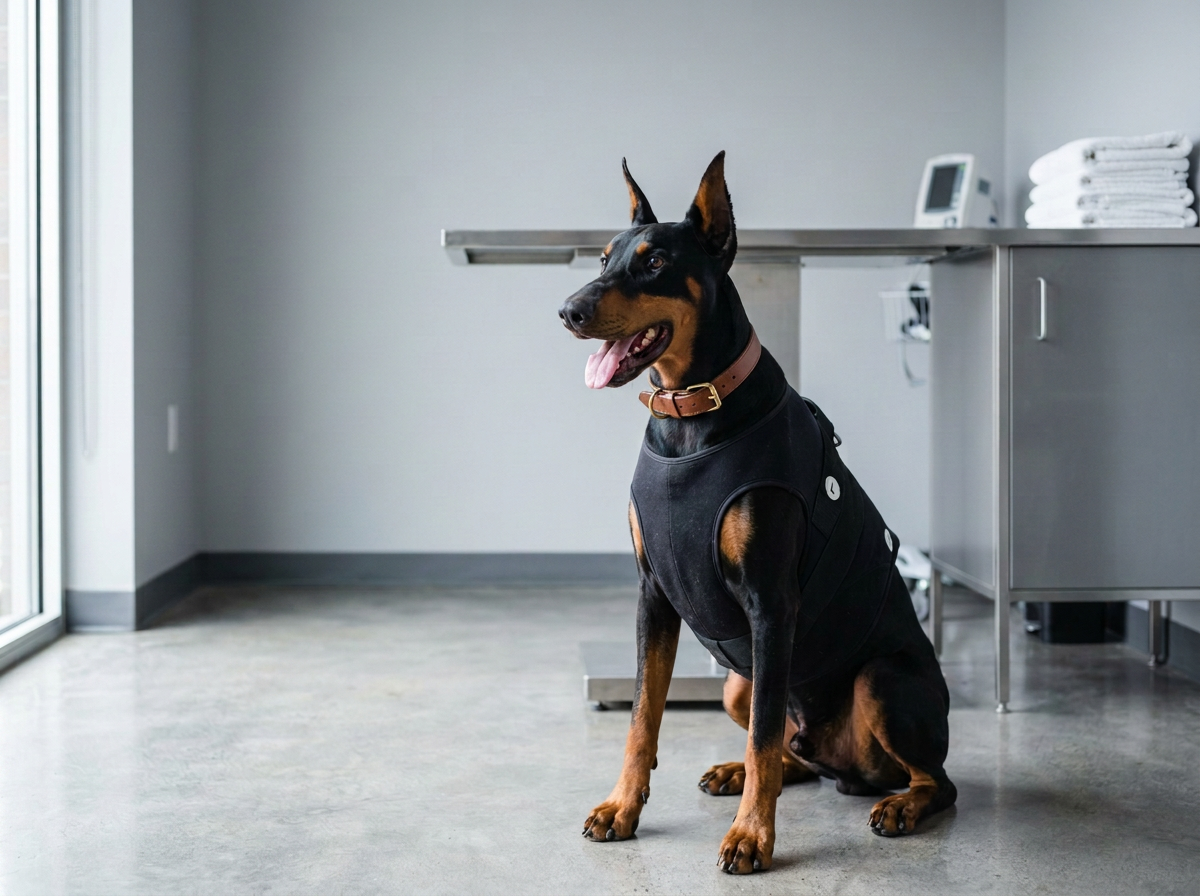
Continuous cardiac monitoring to detect, diagnose, and manage heart arrhythmias in dogs and cats.
While a standard resting electrocardiogram (ECG) captures only a few seconds of your pet's cardiac activity, many heart rhythm abnormalities occur intermittently throughout the day or during normal routine activities. Ambulatory ECG and Holter monitoring record thousands of heartbeat cycles over a 24 to 96-hour period, providing our board-certified veterinary cardiologist with a complete, unmasked picture of your pet's heart rhythm.
At TriState Cardiology for Pets, continuous Holter monitoring allows us to identify hidden arrhythmias, evaluate unexplained fainting or weakness, and assess how effectively your pet is responding to cardiac medications.
24 to 96-Hour Ambulatory ECG & Holter Monitoring
What Is Ambulatory ECG & Holter Monitoring?
A Holter monitor is a lightweight, portable electrocardiogram device attached to a comfortable harness worn by your dog or cat. As your pet goes about their normal daily routine—sleeping, playing, eating, and exercising—the monitor continuously records every single heartbeat over a 24, 48, 72, or 96-hour window.
Once the monitoring period is complete, the recorded data is downloaded and analyzed using specialized software to detect:
Occult (Hidden) Arrhythmias: Abnormal heart beats that do not show up during a brief clinical exam.
Frequency & Severity: The exact count of abnormal beats (such as VPCs or APCs) and whether they occur in bursts or sustained runs.
HRV & Heart Rate Dynamics: Overall average, minimum, and peak heart rates across day and night activity cycles.
Why Would My Dog or Cat Need Continuous Holter Monitoring?
Your primary veterinarian or veterinary cardiologist may recommend a 24–96 hour ambulatory ECG for several key reasons:
Evaluating Unexplained Symptoms: Diagnosing the root cause of fainting spells (syncope), sudden weakness, collapse, or lethargy.
Breed Screening: Screening at-risk breeds for inherited heart conditions before symptoms appear—such as Arrhythmogenic Right Ventricular Cardiomyopathy (ARVC) in Boxers or Dilated Cardiomyopathy (DCM) in Doberman Pinschers and Great Danes.
Antiarrhythmic Medication Monitoring: Assessing whether heart rhythm medications are successfully controlling an arrhythmia or need dose adjustments.
Post-Procedure Evaluation: Monitoring cardiac stability following interventional procedures or surgery.
How Holter Monitoring Works: What to Expect
Painless Fitting: Small, non-invasive electrode patches are placed on your pet's chest. A lightweight digital recording vest or harness is fitted comfortably to secure the equipment.
At-Home Monitoring: Your pet returns home with you to maintain their normal daily routine. You will keep a simple activity log detailing when your pet eats, sleeps, exercises, or shows any symptoms.
Data Analysis: After the designated monitoring period (24 to 96 hours), the vest is returned to our clinic. Our cardiology team analyzes the full heartbeat record alongside your activity log to deliver a comprehensive diagnosis and tailored treatment plan.
Ambulatory ECG & Holter Monitoring FAQs
-
Most pets tolerate the lightweight recorder and vest well, although some need time to adjust. The electrodes, wrapping, or vest may occasionally cause skin irritation or discomfort. Let the veterinary team know if your pet seems distressed, chews at the equipment, or develops redness so they can advise you.
-
Yes! We encourage your pet to follow their normal daily routine, including light exercise, walks, and normal household activities. However, the unit must remain completely dry, so swimming, baths, or walking in heavy rain must be avoided during the monitoring period.
-
A standard clinic ECG records heart activity for only 1 to 5 minutes, often while a pet is stressed or anxious in an exam room. A Holter monitor captures tens of thousands of heartbeats over 1 to 4 days in your pet's natural, stress-free home environment, making it far more likely to capture intermittent or hidden arrhythmias.
-
Once the unit is returned to our practice, the full cardiac dataset is processed and thoroughly reviewed by our cardiology team. Detailed diagnostic reports and treatment recommendations are typically delivered within 4–7 business days.
-
To ensure clean electrical contact and accurate heartbeat readings, small patches of fur on both sides of the chest are gently shaved where the adhesive electrode pads are placed. Fur typically grows back completely within a few weeks.